- (800) 416-8102
- info@nativepartnership.org
- 16415 Addison Rd, Suite 200, Addison, TX 75001-3203

Keeping Culture and Community at the Heart of Learning
By Joshua Arce
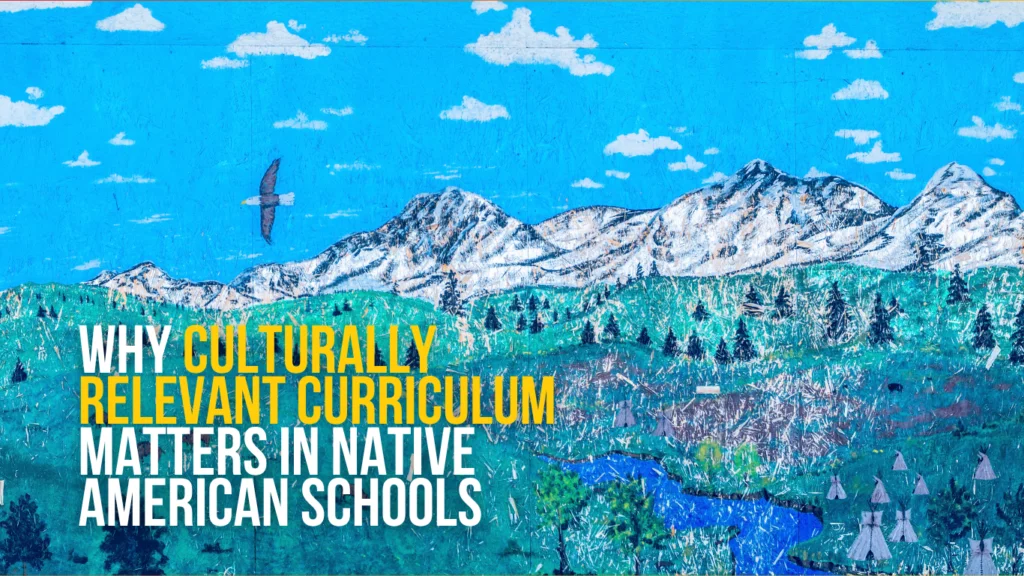
For generations, Native children were sent to schools designed to separate them from their languages, cultures, and communities. Education was often used as a tool of assimilation rather than an opportunity to strengthen connections to home.
Native communities have long worked to change that.
One important example is the Rough Rock Demonstration School (RRDS) on the Navajo Nation. Opened in 1966, Rough Rock became the first Bureau of Indian Affairs (BIA) school to be directly operated by a Tribal Nation. The school incorporated Navajo language, culture, and traditions into its curriculum while giving the local community a greater role in its children’s education.
RRDS helped demonstrate what education could look like when Native communities have a meaningful voice in how their children learn.
That principle was strengthened by the Indian Self-Determination and Education Assistance Act of 1975, which expanded Tribes’ ability to run their own schools and develop curricula tailored to their needs.
Today, culturally relevant education continues that work by connecting classroom learning with students’ languages, histories, cultures, and communities.
What does culturally relevant education look like?
Culturally relevant education is about more than adding a lesson about Native Americans to a history class. It can mean connecting academic learning to the specific communities and places where students live.
A language arts class might use books by Native authors. A science lesson might incorporate local knowledge about plants, animals, or the environment. A history class might teach the history of the local Tribal nation alongside the history of the United States. Elders and other community members might share knowledge with students.
Language can also play an important role. Native languages carry knowledge, histories, and relationships across generations. Incorporating Native language instruction into schools can therefore support both academic learning and cultural continuity.
Learning through culture
One of the most important distinctions is between learning about culture and learning through culture
Teaching about a Native community might involve learning about its history and traditions. Teaching through culture can mean incorporating community knowledge, language, relationships, and local experiences into the learning process itself.
This approach recognizes that there is no single Native American culture. There are hundreds of distinct Tribal nations, each with their own language, histories, and traditions.
For that reason, culturally relevant education is most meaningful when it’s connected to specific communities rather than relying on generalized ideas about Native peoples.
The Smithsonian’s Native Knowledge 360° initiative is one example of this approach. Its educational resources incorporate Native perspectives and provide educators with tools for teaching more accurate and complete histories of Native Americans.
Looking forward after 250 years
As the United States marks 250 years since the Declaration of Independence, we should reflect on whose histories are included in our understanding of America.
Our ancestors were here long before the United States was founded, and they remain an important part of the country’s present and future.
Culturally relevant education helps make that continuity visible. It gives Native students opportunities to see their languages, communities, and history reflected in their education while giving all students a fuller understanding of where they live.
After 250 years of American history, there is still an opportunity to broaden the stories we teach and recognize that Native history is not only something that happened in the past.
Learn where you live
Learning about Native cultures can begin with the communities around you. Whether you want to learn about your own Tribal heritage or better understand the Native nations connected to where you live, consider these steps:
- Find local Tribal nations. Use the Bureau of Indian Affairs’ Tribal Leaders Directory to identify federally recognized Tribes in your state or region. Then visit Tribal government or cultural websites to learn more directly from those communities.
- Discover traditional landbases. Native Land’s interactive map can help you learn about Indigenous territories and the traditional lands associated with Native nations, including communities that may not be federally recognized. Use it as a starting point for further learning and consult Tribal sources for more information about their history, lands and communities.
- Explore Native-created resources. Read books by Native authors, explore educational resources created by Native educators, and visit museums or cultural centers that share Native perspectives.
- Learn about local Native history. Look beyond general lessons about Native Americans and learn about the specific Tribal nations, communities and histories connected to your area.
- Attend public events and programs. Look for cultural events, educational programs, museum exhibitions and other opportunities where Native communities invite the public to learn and participate.
- If you are Native, connect with your own community. Explore your Tribe’s language, history, traditions and cultural resources. Learning from Elders, family members and other community knowledge holders can be an important way to strengthen those connections.
- Support Native-led education and cultural preservation. Look for organizations, schools and community programs that are working to preserve Native languages, strengthen cultural education and ensure Native students have opportunities to learn through their own cultures.