- (800) 416-8102
- info@nativepartnership.org
- 16415 Addison Rd, Suite 200, Addison, TX 75001-3203

Cheyenne River Sisters Building Healthier Futures
By Alicia Searfoss
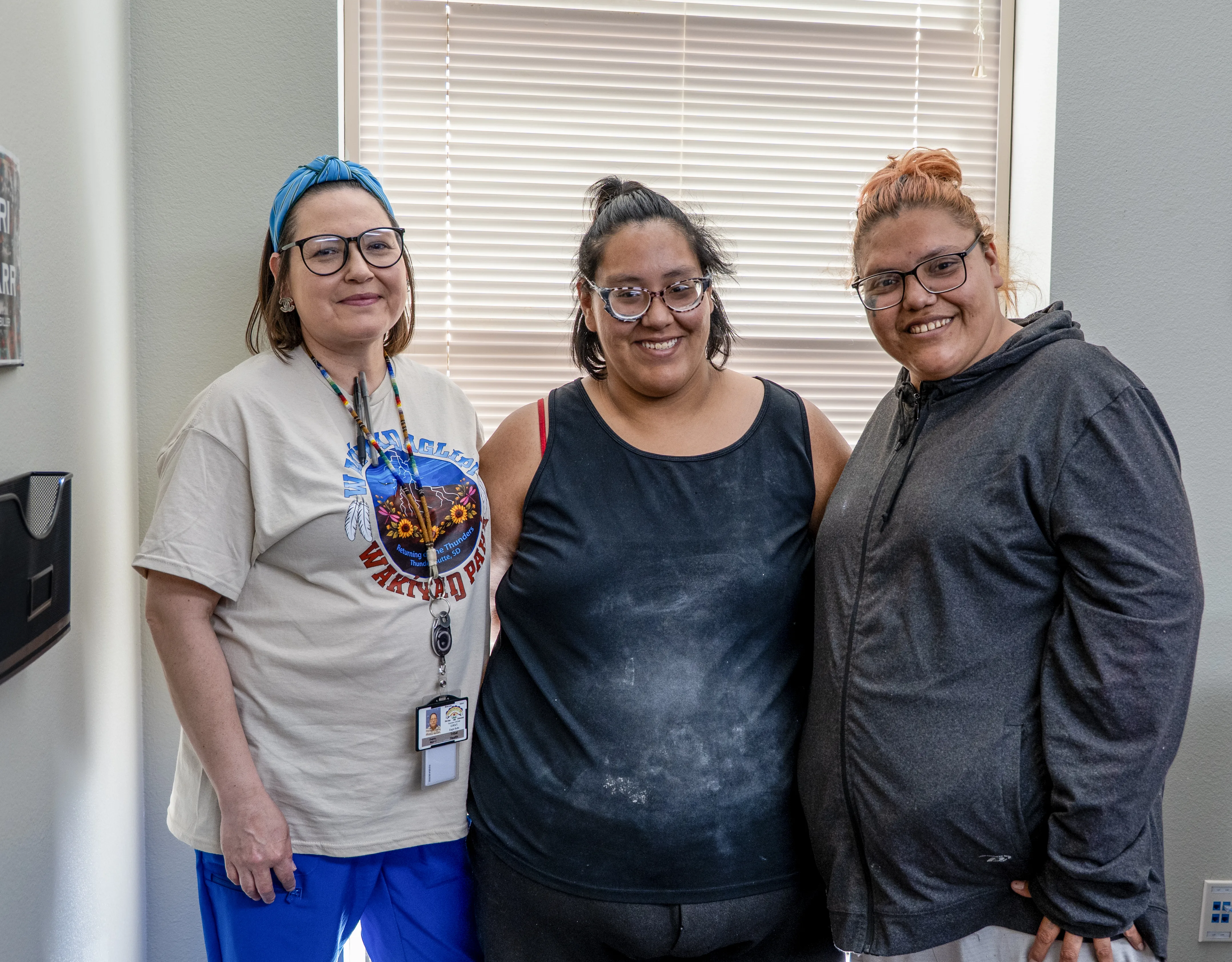
In Eagle Butte, South Dakota, a town of fewer than 1,500 people on the Cheyenne River Reservation, sisters Cetanwi B. and Amani H. are raising their young families together. Their home is full, with eight people under one roof. Like many families in the community, they face daily challenges, including limited transportation, tight budgets, and long distances to basic supplies.
Through the Maternal Child Health program at Cheyenne River Health Center, they’ve found a steady source of support in Mary Jo D., a trusted health worker who meets families where they are.
When our Program Partner, Mary Jo, first met Cetanwi and Amani, they were quiet. Now, they laugh, joke, and show their appreciation.
With support from the Native American Aid (NAA) program of Partnership With Native Americans® (PWNA), Mary Jo provides families with personal care and household items along with health education — simple things that make a real difference.
Cetanwi, 27, is raising a 2-month-old and a toddler. She says Mary Jo has been there through both pregnancies, helping her stay on track even when transportation was a barrier.
“She helps us with our vitals,” Cetanwi says. “I come to her all the time if I need help. I just appreciate the fact that if I don’t know something, I can just come to her right away.”
When rides were hard to find, Mary Jo helped coordinate appointments, provide transportation, or offer home checkups. “That’s what kept most of my pregnancy healthy,” says Cetanwi.
The incentives — things like cleaning supplies and toilet paper — help bridge the gap between trips to the store.
“Whenever she gives us incentives, it helps us hold off till I can buy more,” Cetanwi says. “I always run out of toilet paper. It’s pretty helpful.”
Her sister, Amani, 33, is also raising a young son while managing her own health challenges. She says the extra support from Mary Jo keeps her moving forward.
“She’s very helpful. She’s the person I trust for womanly things,” Amani says.
Amani explains that the incentives, especially diapers and wipes, matter more than people might realize.
“Everything is helpful. When we run out, at least we have those to use. It works for the mothers,” she says.
For Amani, even walking through the door took courage. She was hesitant to ask for help, but the welcoming environment and practical support made it easier to take that first step. Now, she stays connected to the care that keeps her and her son healthy.
“It helps me move forward and do the things I’m supposed to do,” says Amani.
Mary Jo sees that impact every day and knows her community would be deeply affected without the Maternal Child Health program.
“A lot of our women and children would struggle with just the basic health care,” says Mary Jo. “That’s one of the good things about living here — we do take care of each other, but it also can be hard because we don’t have a lot of resources here. This is probably the main resource for a lot of girls.”
In a place where the nearest Walmart is 90 minutes away, and the local dollar store shelves are often empty, everyday essentials are not guaranteed.
“We’re without a lot here in the middle of nowhere,” says Mary Jo.
That’s why the health incentives matter. They don’t just meet immediate needs. They help bring families through the door.
“The incentives are what drive the patients to come to my program,” she says. “On top of that, they’re getting the education. It’s a win-win situation.”
That education — on pregnancy, infant care, and long-term health — builds confidence and trust.
Mary Jo says her goal is simple:
“In the Lakota way, I just want to be a good relative and help my people the best that I can,” she says. “We’re grateful for PWNA.”
The personal care and household items you help provide are more than supplies. They are a reason for a young mother to keep an appointment, a way to stretch a limited budget, and a small relief in a place where resources are scarce.
For families like Cetanwi’s and Amani’s, your support is part of what makes healthier futures possible.
Cetanwi has referred others to Mary Jo for help and wants donors to know that they should “keep [donating] because it helps the people.”