- (800) 416-8102
- info@nativepartnership.org
- 16415 Addison Rd, Suite 200, Addison, TX 75001-3203

Educational Tools for Brighter Futures
By Alicia Searfoss
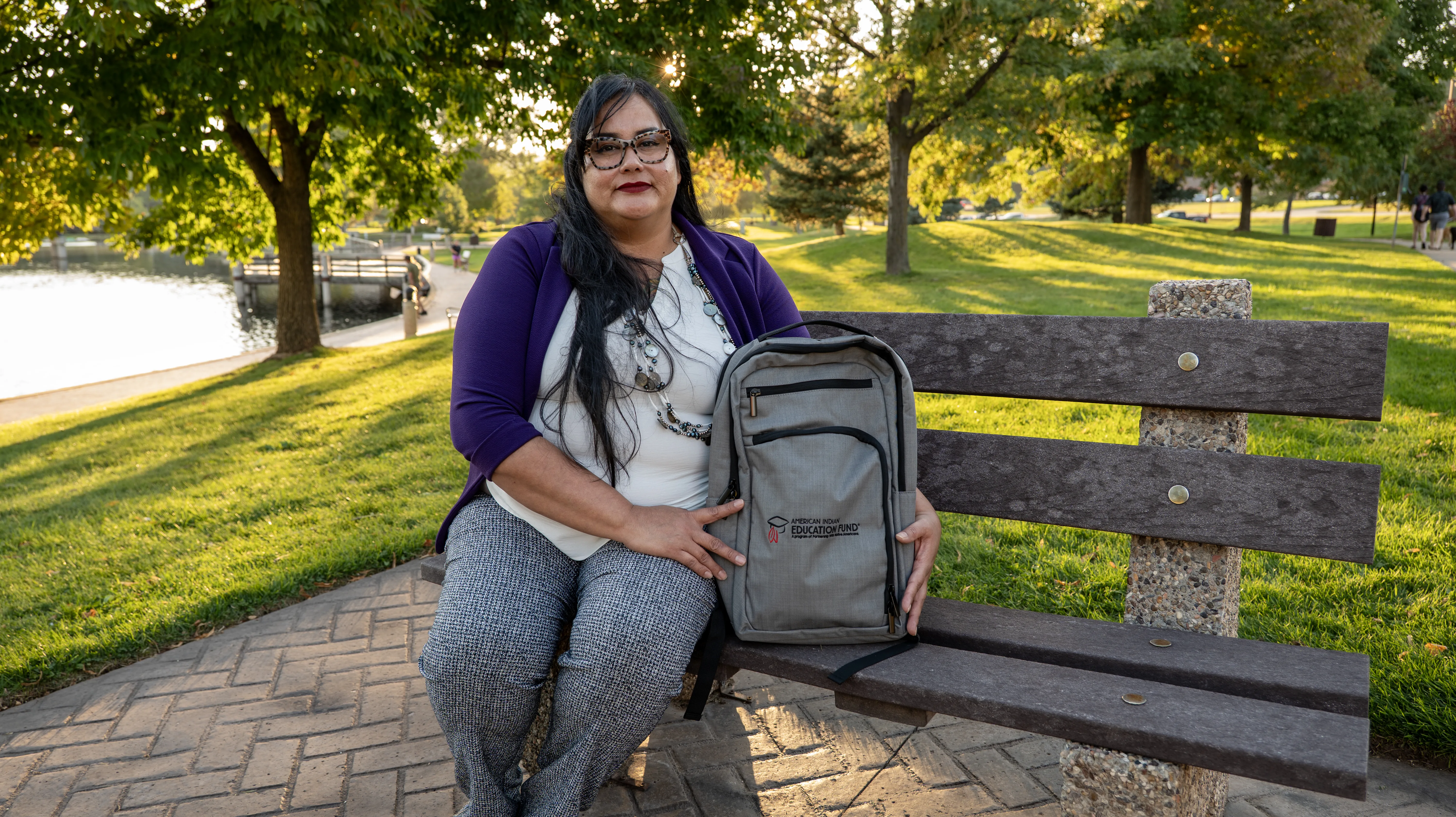
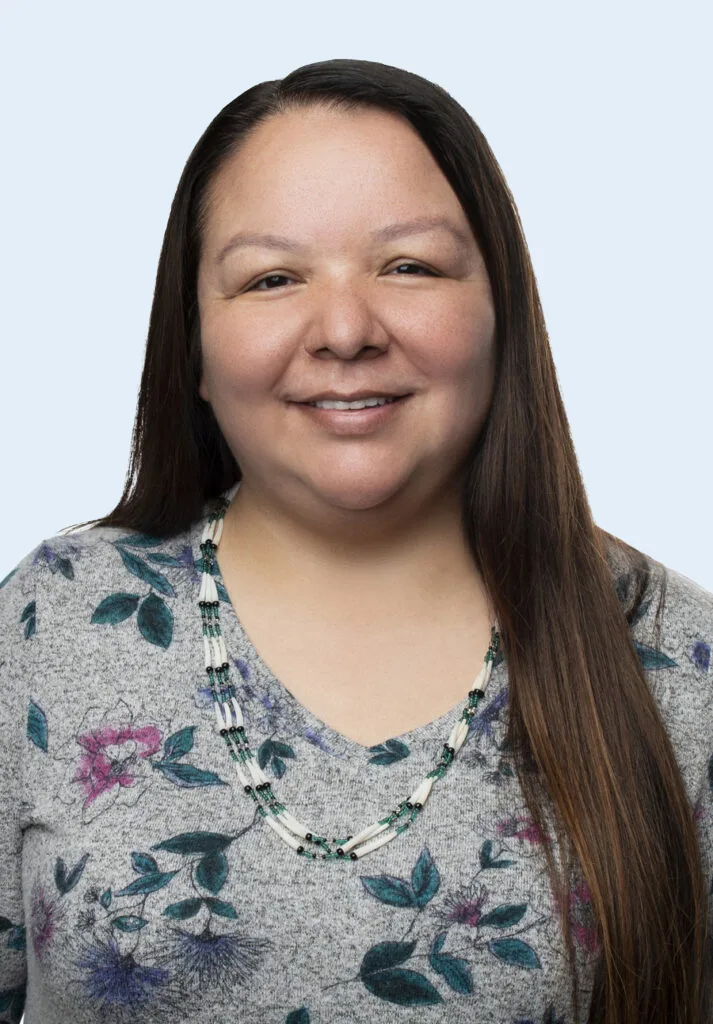
When Sarah F. received a laptop in addition to her scholarship from the American Indian Education Fund® (AIEF), it was more than a gift.
“It felt so good because it’s been a struggle using the [laptop] that I have,” she said. “I couldn’t afford in my budget to buy a laptop, so I was making do with what I had.” Her old one was slow, heavy, and ran out of space quickly. “It was a relief when you guys told me that you were going to help me with a laptop, so thank you.”
A member of the Rosebud Sioux Tribe, Sarah grew up in Mission, South Dakota, where her family’s story reflects both hardship and perseverance.
“My grandma never went to school. Lakota was her first language, and she couldn’t read or write in English,” she said. “We had to teach her how to sign her name. We had to go to the store with her and help her count money.”
Her mother made it to 11th grade in boarding school. Sarah is the first in her family on her mother’s side to attend college.
Her education journey has stretched over two decades. After dropping out as a teen mom, discouraged by school administrators, she earned her GED and later began college.
“Even though it’s been a long journey for me, I’ve continued taking classes. I was working two jobs to provide for my children.” At one point, there were 11 children at home as Sarah cared for her sister’s kids while raising her own six. “Balancing that many children in a house, plus going to school full-time, plus working a job. There were many late nights of homework,” she said. “When you reach those goals, it’s so satisfying. It’s overwhelming to be able to achieve my associate’s degree and my bachelor’s degree, and now I’m going on to my master’s degree.”
Now 45, Sarah is pursuing a Master of Legal Studies in Indigenous Peoples Law online at the University of Oklahoma while working full-time as Director of People and Culture at the Great Plains Tribal Health Board.
“The financial demands of tuition, textbooks, and family expenses are overwhelming, making it difficult to balance work, school, and family life,” she said.
Every weekend, she makes the 180-mile drive from Rapid City to Mission to attend ceremonies and stay connected with family.
“It is a lot, but I am really committed to making sure I have those cultural ties,” she said. “I want my kids to have their cultural ties to who they are and their spirituality.”
Sarah’s long-term goal is to give back through her education. “I am committed to using my education and professional experiences to serve my community and advocate for Native sovereignty,” she said.
“The Master of Legal Studies program will provide me with the tools necessary to pursue my career goals and address the systemic challenges Native communities face. Ultimately, my education will allow me to contribute to shaping policies that promote economic development, governance, and social justice within Native communities, ensuring that they can thrive in today’s complex world while honoring their rich cultural heritage.”
Despite her determination to serve her community, the path hasn’t been easy.
“My higher education journey has been very hard for me, and the barriers I face as a Lakota woman and as a mother to overcome those things, to be a positive role model for the future generations,” she said. “Even though we come from poverty, it’s possible to overcome.”
Sarah hopes that donors understand the significance of their support. “I just want to thank them and let them know that I’m really grateful and I don’t think I can ever repay them for their generosity and what it meant to me as a single parent to receive that kind of help. It definitely made an impact.”
Only 16% of Native Americans hold a bachelor’s degree. AIEF, a program of Partnership With Native Americans® (PWNA), empowers dreamers like Sarah. Your support can help more students finish what they’ve started and strengthen their communities for the next generation.