- (800) 416-8102
- info@nativepartnership.org
- 16415 Addison Rd, Suite 200, Addison, TX 75001-3203

From Wildfire to CPR: Why Training Matters
By Alicia Searfoss
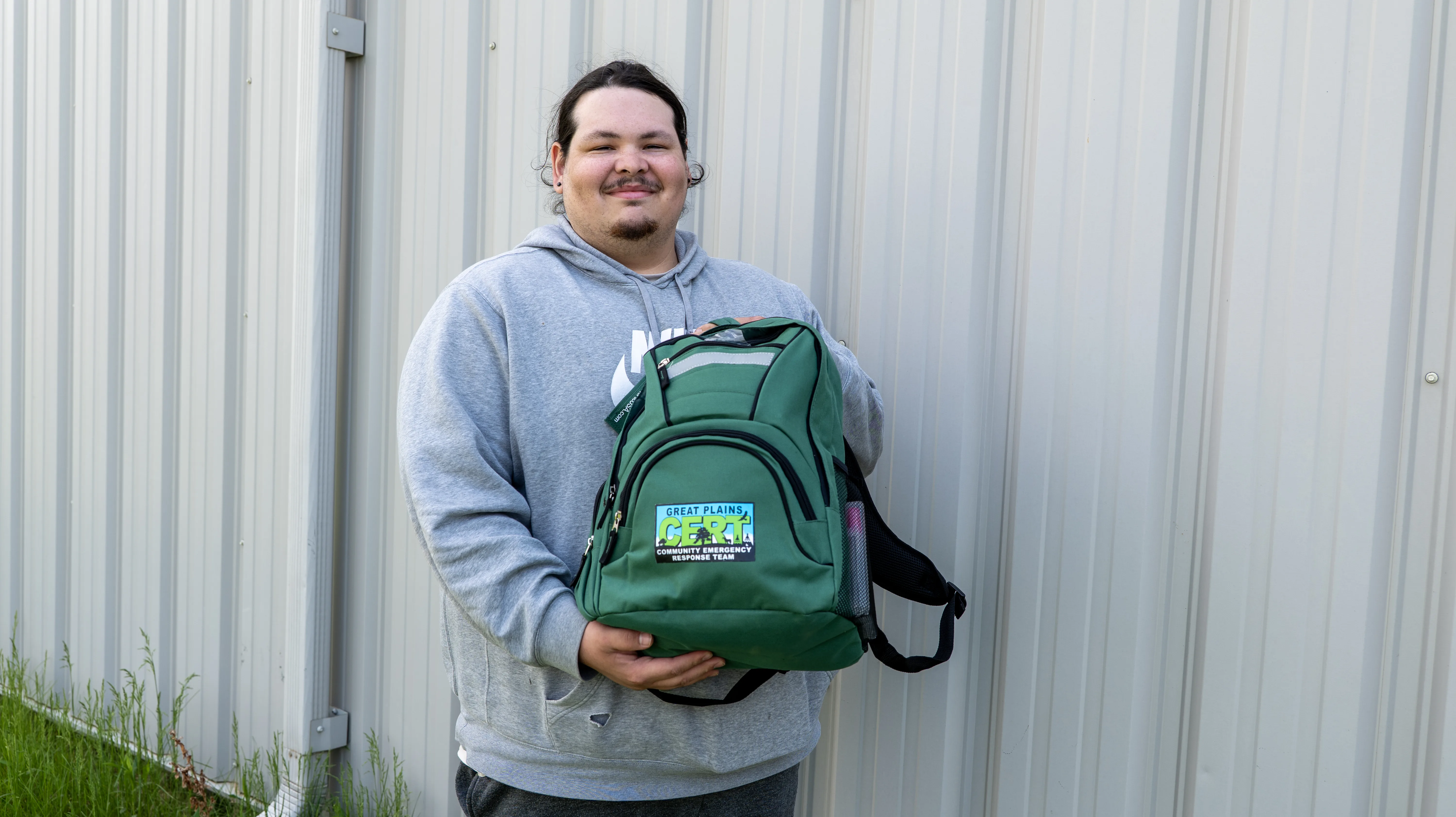
In Dupree, South Dakota, applause filled the room as Harold T. announced, “You are hereby certified as firefighters.” A group of community members had just completed Community Emergency Response Team (CERT) training, supported by the Northern Plains Reservation Aid® (NPRA) program of Partnership With Native Americans® (PWNA).
For Derrek E., a Tribal officer on the Cheyenne River Reservation, this kind of training is not just important, it’s essential. “I got to do hands-on stuff like the fire extinguishers,” he shared. “It’s especially refreshing to know that [Harold] has past EMT experiences, so he teaches us the different tricks he has.”
Derrek has been certified in CPR and first aid before, but he appreciated the chance to deepen his skills with someone who’s worked in the field. “It’s always good to get a refresher. It’s also cool to learn different things from somebody that has worked in the field,” he explained.
NPRA’s Emergency Preparedness service focuses on building capacity in remote Tribal communities, where emergency help can take too long to arrive, and where community members often step in as first responders. Participants in the CERT course learned how to treat life-threatening conditions like airway obstruction, severe bleeding, and shock—skills that can save lives in minutes. They also practiced START (Simple Triage and Rapid Treatment), a method that helps first responders prioritize care for as many people as possible.
Derrek knows how urgent that can be. Praising the training, he told us, “It gives everyone a fair opportunity to come and participate. There are a lot of people from the smaller communities who are able to learn. It’s going to be a better resource for the communities. If [police] can’t respond, there will be some people to help us.”
He’s seen the impact of local response before. Just a few months ago, a wildfire spread across 30,000 acres of the reservation. Derrek explained, “A lot of the community came together for that, so it’s better knowing these people care about their communities so much, they’re willing to help other people.”
But challenges remain. Derrek receives more frequent calls during the day, but the more serious ones come at night. Cell service across the reservation makes communication and emergency response more difficult. “In general, first responders… we need more.”
That includes ambulances and basic supplies. Still, he’s encouraged by how training like this is helping. “A lot of people don’t have transportation to these [trainings],” he said. Yet with donor support, more training can be offered, leaving more communities feeling prepared.
To donors, Derrek had a simple but heartfelt message: “I’d like to say thank you because it provides training for not only law enforcement but also community members to help themselves and help others.” Donate to NPRA today.