- (800) 416-8102
- info@nativepartnership.org
- 16415 Addison Rd, Suite 200, Addison, TX 75001-3203
Prepared to Save Lives in Rural South Dakota
By Alicia Searfoss
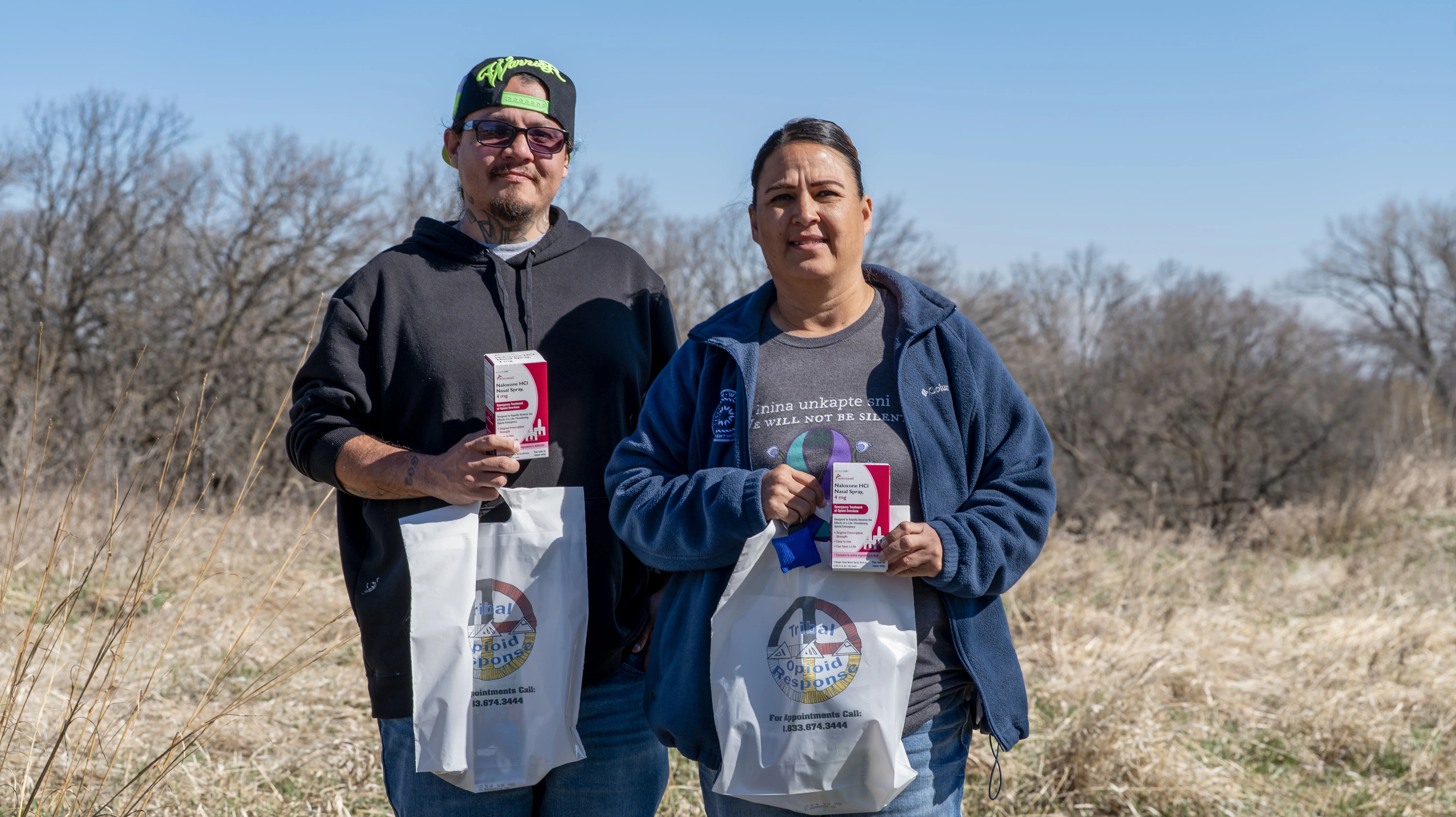
At an emergency preparedness training in the Big Coulee District of the Lake Traverse Reservation in South Dakota, Cody G. saw something he hadn’t seen before — a way to save a life in the critical minutes before help arrives.
Cody lives in a sober living home with nine other men and is in recovery. He’s seen the impact of opioid use up close. But this was his first time learning how to respond to an overdose, and he appreciated the support.
“Being an ex-addict that’s been around drugs and seen a lot of things — that is good,” says Cody. “This is my first time attending one of these. Now I know what to do.”
In a rural community where emergency response can take up to half an hour, and the nearest advanced care is nearly an hour away, those minutes matter.
“Most of the time, it’s life or death. Having resources on hand — even just the knowledge of knowing — can save somebody’s life,” says Cody.
During the training, nurse Jocelyn R. demonstrated how to recognize an overdose, respond quickly, and administer NARCAN — a medication that can reverse the effects of opioids in minutes. She explained that fentanyl can be 50 to 100 times stronger than morphine and is driving many of the overdoses she sees.
NARCAN is typically given as a simple nasal spray. It works by quickly attaching to opioid receptors in the brain and blocking the drugs from slowing or stopping breathing.
The group left with NARCAN in hand, ready to use it if needed. For Cody, that matters not just for himself, but for the people around him.
“Every household should have one of these. There are a lot of drugs and opiates being distributed to the community,” he says.
Another participant, Rhonda W., plans to have her family ready to respond with NARCAN.
“This is pretty cool. I can keep one at home,” says Rhonda.
She plans to keep another dose in her 18-year-old son’s vehicle as he prepares to leave home.
“I want to make sure he understands how important it is to save a life if you can. Nowadays, you just never know,” she says. “It can always save the lives of our children, grandchildren, and young adults. I hope they do more training like this.”
Cody works with Rhonda at the tribe’s Food Preservation and Security program, a passion he developed while growing up around gardening.
“I like it because it’s soothing and comforting — part of recovery,” he says.
The NARCAN training was made possible through the Northern Plains Reservation Aid® (NPRA) program of Partnership With Native Americans® (PWNA). With your support, training like this is reaching people who need it most — people ready to take what they’ve learned and use it to protect their communities.
“I’d like to just thank [donors] for providing us with the information and providing us with a two-dose NARCAN,” says Cody. “They’re doing really well, and I’d like to thank them, and I appreciate the knowledge they’re giving to the people.”