- (800) 416-8102
- info@nativepartnership.org
- 16415 Addison Rd, Suite 200, Addison, TX 75001-3203

Reservation Series: San Carlos Apache
By Partnership
Enrolled Tribal Members: 8,921
People on the Reservation: 9,385
Programs Partnering with NRC: 22
Sovereign Nation Since: 1871
Official Tribal Web Site: http://www.sancarlosapache.com/home.htm
A Bit of Culture:
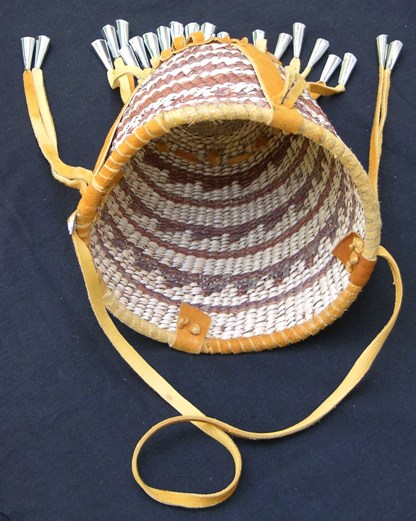
The San Carlos Apache are world-renowned for their peridot jewelry and Apache basketry. San Carlos is home to the world’s largest deposit of peridot, a beautiful crystal also known as “stone of the sun.” The finest quality ancient craftsmanship can be seen today in Apache burden baskets, cradleboards, and beadworks. These are often sold by artisans during holidays and community events, about 100 miles east of Phoenix.
The “Apache” Ndeh (the people) are a culturally rich society tied to Mother Earth and steeped in centuries of clanship lineage and knowledge passed down through the generations. Descendants of the ancient Athabascan who lived in interior Alaska, the Apache migrated to the Southwest as early as the 10th century. Their traditional homelands extended through Arizona and New Mexico and possibly across the border into Mexico. Many community members are skilled farmers who raise squash, gourds, watermelon, corn, and even sugar cane in family plots.
A Bit of History:
Historically, there were 7 Apachean tribes: Chiricahua, Jicarilla, Lipan, Mescalero, Kiowa-Apache, and Western Apache (which included the San Carlos and White Mountain bands). Up until the 1400s, the 7th Apachean tribe was the people now known as the Navajo. In fact, the traditional language of the Apache – Athabascan – is closely related to the Navajo language.

Originally part of the White Mountain-San Carlos Apache Reservation, San Carlos was split off by the federal government in 1871. But conditions were such that San Carlos is often referred to as the world’s first concentration camp. U.S. military leader John Clum convinced many other Apache bands to move to San Carlos, in exchange for a decreased military presence. Instead, he formed a sort of Tribal Police with limited self-rule by Indians and still under his command. Ultimately, about 4,000 Apache were congregated into an area that was intended for 800 and kept there under armed guard. Clum’s real goal was to cut the government’s cost by “merging” several bands onto one reserve. Chief Eskiminizin, from the Aravaipa Apache group on San Carlos, is said to have formed a lifelong friendship with Clum.
The Land:
The San Carlos Apache Indian Reservation spans 1.8 million acres across 3 counties in southern Arizona. The land varies from meadow to desert to pine forest. Hunting and fishing are main attractions for visitors. The forest is inhabited by elk, antelope, bighorn sheep, javelina (pigs), and migratory birds, and the streams run with Apache Trout and other fish.

Current Economy:
The San Carlos Apache Tribe has several income streams: a 500-acre farm for cotton and alfalfa, a commercial sawmill that is leased to Precision Pine, a small open pit mine where peridot and agate stones are mined, cattle ranching that generates about $1 million a year in livestock sales, an 18-hole golf course, an RV park, a casino that attracts regional guests, and a water rights settlement or grant related to their farming activities. Between this, schools, and social programs, the tribe is by far the largest employer on the reservation. The San Carlos Wellness Center is one of the busiest tribal mental health clinics in the U.S.
Education & Income:
The median household income for San Carlos is less than $14,000. The lack of available jobs leaves about 65% of the active labor force unemployed, and about two-thirds of the residents live below poverty level. The high school graduation rate is 70%.
Learn More:
http://itcaonline.com/?page_id=1177
http://cals.arizona.edu/pubs/natresources/az1474.pdf
http://www.scateducationdepartment.com/
http://www.scatwellness.com/index.html
http://bit.ly/SanCarlosExtPgm
Leave a Comment
You must be logged in to post a comment.






Home Swap
The facts mentioned within the post are several of the most effective accessible…and Acquiring study this I believed it had been quite beneficial. I enjoy you taking time and energy to place this short article collectively.
Mark
I have about 10 big baskets made by Evalina Henry in the early 80s are they worth much
Moderator
Hi Mark, We can’t tell you the value of the baskets, but Evalina Henry is a reknowned artisan who makes precious works.