- (800) 416-8102
- info@nativepartnership.org
- 16415 Addison Rd, Suite 200, Addison, TX 75001-3203

Warm Homes for the Oglala Sioux
By Alicia Searfoss
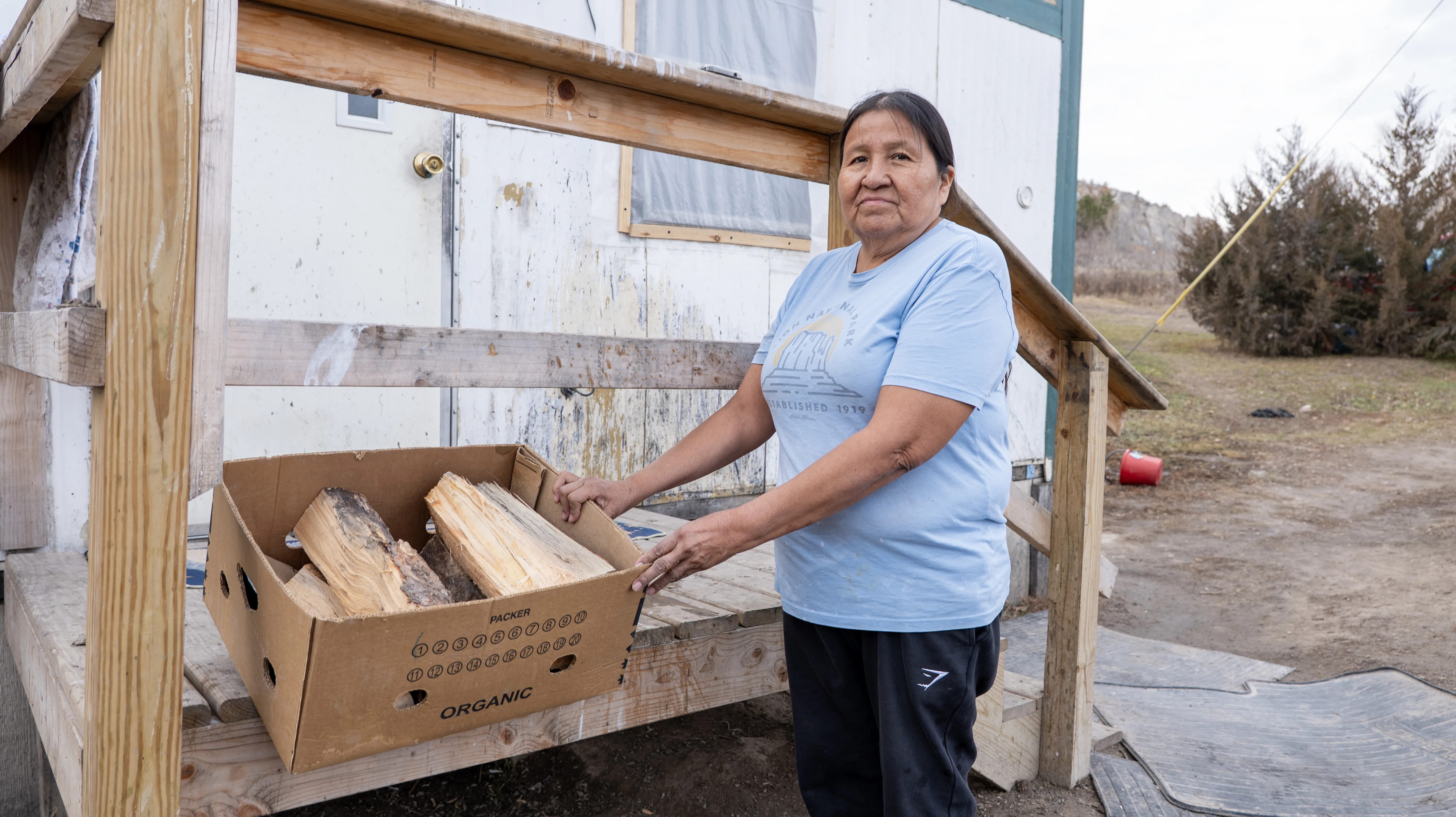
When the temperature drops in Porcupine, South Dakota, Cyrinthia., her partner, and their son find themselves closing off the back bedroom of their trailer to conserve heat, so they are warm enough to sleep in the living room.
Like many Elders on the Pine Ridge Reservation, Cyrinthia, 58, relies on wood heat to survive the winter. For families living in poorly insulated homes, with limited income and few alternatives, running out of firewood means choosing which rooms to keep warm, or going without heat altogether. This winter, Elders in the community received cords of firewood from the Northern Plains Reservation Aid® (NPRA) program of Partnership With Native Americans® (PWNA).
“Oh my God, I’m so thankful. We really needed that wood, because it was cold,” says Cyrinthia.
Their trailer is poorly insulated, and there is only one working electrical outlet. And with no running water, they rely on an outdoor hydrant to bathe and to wash clothes and dishes, but it often freezes in the winter. They gather jugs of water to prepare before a storm.
“It’s the only home you have,” says Cyrinthia. “Ever since I was a young girl, I’ve always lived this way, with a wood stove and no electricity. We still survive,” she says.
Maintaining the trailer’s warmth requires constant effort.
“[The wood] went kind of fast because we burn it day and night,” she says.
The wood stretched only about a week and a half for her three-person household, as well as her daughter and grandsons, who live next door. When they run out of firewood, they burn wood pallets. Getting firewood on their own is difficult and expensive. The road from their home to town is washed out and in need of serious repairs, making travel a challenge. The cost of having wood delivered is prohibitive.
Cyrinthia hopes to one day get a new home, but their only income stems from Donovan’s disability checks.
Across Indian Country, the need for heat assistance is widespread. One in six Native American families lives below the poverty level.
Our program partner, Julie T., coordinated the firewood deliveries in Porcupine.
“The economy here leaves so many Elders with unmet needs. Food, electricity, and heat during the winter are the biggest problems we face, so the help that was received was appreciated,” says Julie.
For families like Cyrinthia’s, living in substandard housing where heat escapes as quickly as it’s made, even a full cord of wood can disappear fast.
Cyrinthia shares a message with donors who made the firewood delivery possible:
“I wish I could let them know in person that I’m really thankful to them that they helped me with the wood. Because it is really hard to get wood around here, and when that came, it was really cold, so I was really happy,” she says.
Another Elder, 71-year-old Darryl L., also received a cord of wood.
“It helped out. Used it all,” he says.
For Darryl, the wood lasted less than a month. He relies on wood and sometimes space heaters to help warm his home, which drives up his electric bill. Wood is his biggest expense, costing about $300 a month to have it delivered.
“It’s needed in the community. All of them burn wood,” he says.